Title: AirDrop and Quick Share Vulnerabilities: Threats to Billions of Devices and How to Secure Them
Sharing photos or documents with nearby devices has become part of everyday life. However, recent research reveals that the convenience offered by AirDrop and Quick Share hides security gaps larger than many realize. With more than five billion active devices at risk, it is crucial for users to know how to protect themselves from these potential threats.
Understanding the Existing Vulnerabilities
Research conducted by a team from the CISPA Helmholtz Center for Information Security found new vulnerabilities in Apple's AirDrop and Android's Quick Share that can be exploited by malicious actors. In many cases, attackers do not need to touch your device, send phishing links, or share Wi-Fi networks. They only need to be within 30 meters of you with their laptop.
The researchers studied how both ecosystems perform wireless file transfers. These features operate as high-privilege background services that activate once another device approaches. Although intended to provide a seamless experience, this actually creates security loopholes.
Weaknesses in Apple and Android Systems
On Apple's side, the vulnerability exploits background daemons controlling AirDrop, AirPlay, Handoff, Universal Clipboard, and Continuity Camera. With just one malformed request, an attacker can cause the system to crash. If the attacker repeats this request every few seconds, they can lock your Apple ecosystem, rendering these features unusable.
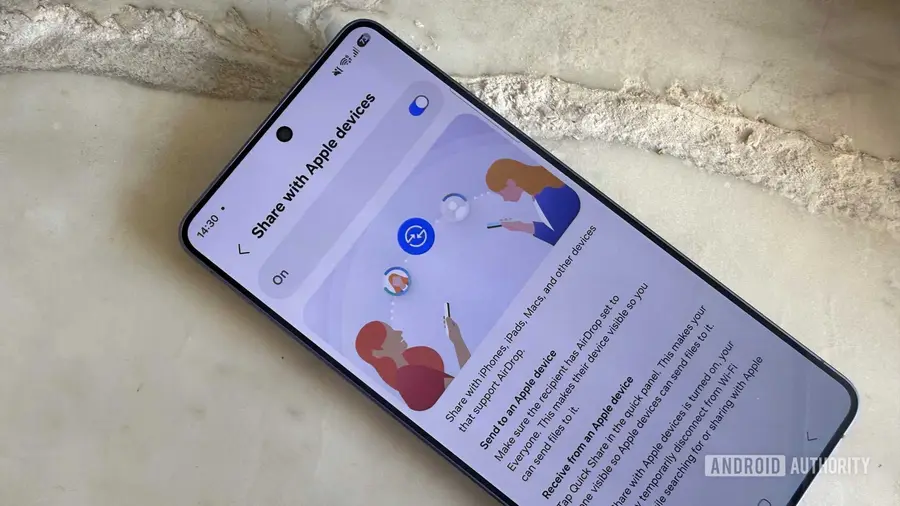
Meanwhile, Quick Share is no better. Research tested Samsung Galaxy S23 Ultra and Google's Windows client, where researchers found ways to bypass critical authentication steps. There is even a memory corruption bug on the Windows side. Although Apple and Google do not share much code, both fall into the same trap: sacrificing security for convenience by exposing complex background processes before the sender's identity can be verified.
Risks and Impact on Users
Although this issue is not about data theft, attackers do not secretly steal private photos from your device. For ordinary users, this is more of a major disruption in the form of denial-of-service. However, for those who frequently use AirDrop or Quick Share, having someone hijack your connection status can be very annoying.
As the situation develops, fixes are already being implemented. Apple has patched one of the three AirDrop bugs in the latest update, while Google has also released fixes for their Windows client. However, other issues, including the bypass on Samsung devices, are still under development or disclosure correspondence.
Steps to Secure Your Device
Don't just wait for software updates to protect yourself. The most vulnerable users are those who set their devices to receive files from "Everyone." Immediately open the general settings on your iPhone or the Quick Share menu on your Android and set visibility to "Contacts Only," or disable file reception entirely. This simple step can significantly reduce the risks your device faces.
With more devices connected than ever, it is important to stay vigilant and take proactive steps to protect your data and privacy. Understanding existing vulnerabilities and wisely configuring your device are key to maintaining your security in an increasingly complex digital world.
Source: https://www.androidauthority.com/quick-share-airdrop-vulnerability-discovered-3683137/