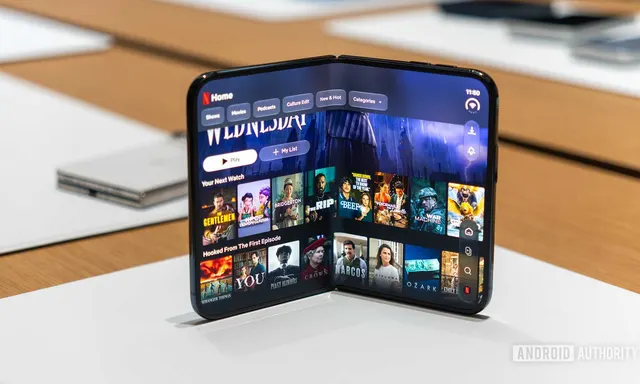
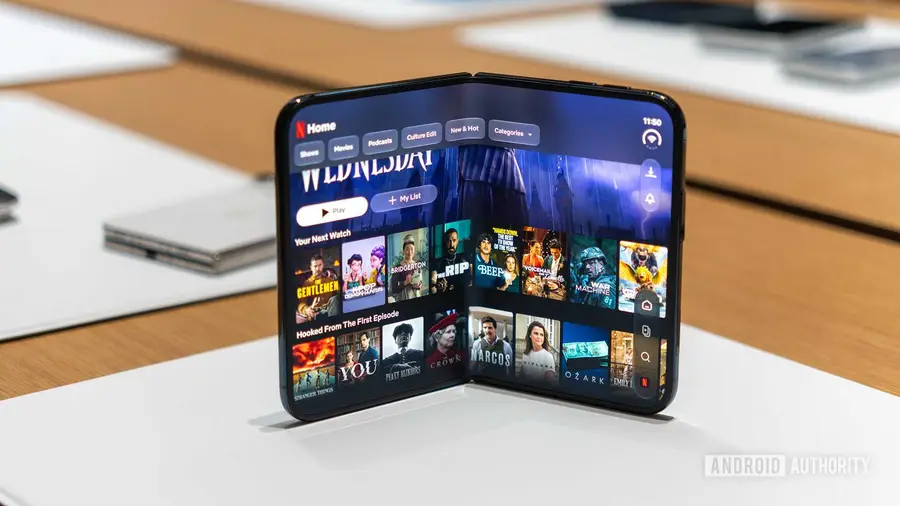
For years, foldable smartphones have made strides in hardware improvements, yet the challenge of app development remains a significant hurdle. With the introduction of Apple's iPhone Duo, there is renewed hope that this could persuade developers to prioritize foldable layouts, which is something that has been a struggle for Android.
Challenges in App Optimization for Android Foldables
Sameer Samat, the President of Android Ecosystem, recently discussed these challenges in an interview with Tom’s Guide. He pointed out that while the hardware has evolved, many applications still lack the necessary optimization for foldable devices. Some developers are either in the process of adapting their apps or are in talks with Google about potential updates.
Apple’s Influence on Foldable App Support
During a hands-on preview of the iPhone Duo, it became evident that Apple is taking a different approach, limiting multitasking to two applications on the inner screen while in landscape mode. This raises an important question: how effectively will third-party applications adjust to this new screen format? Could Apple’s approach lead to better adaptation compared to existing Android applications?
Android’s Ongoing Efforts to Support Foldables
Google has been actively working to enhance app support for foldable devices. Previous issues with app compatibility have hindered the growth of larger Android foldables, with many applications either letterboxing or improperly stretching their content. However, the introduction of Android 16 began to tackle these issues by overriding some restrictions related to orientation and resizing. With Android 17, Google has made adaptive behavior a requirement for apps targeting this latest version, further encouraging developers to optimize their applications for larger displays.
The Potential Impact of a Larger Foldable Audience
Apple’s foray into the foldable market could provide the necessary motivation for developers to invest time in creating adaptable layouts. As more consumers embrace foldable devices, the incentive to build applications that cater to diverse screen sizes becomes increasingly compelling. Samat’s comments indicate that this could also benefit Android users, as an influx of well-optimized applications may enhance their experience.
While Samat acknowledged the progress Android has made, he also took the opportunity to highlight that Android is often at the forefront of innovation. He expressed his admiration for the Galaxy Z Fold 8, which he uses for productivity tasks before transitioning to his laptop for more extensive work.
In conclusion, even though Apple may have entered the foldable market later than its competitors, its impact could be significant. The iPhone Duo might just be the catalyst needed to persuade more app developers to embrace foldable-specific experiences, ultimately benefiting the entire ecosystem.
Source: https://www.androidauthority.com/iphone-duo-android-foldable-app-support-3714733/