
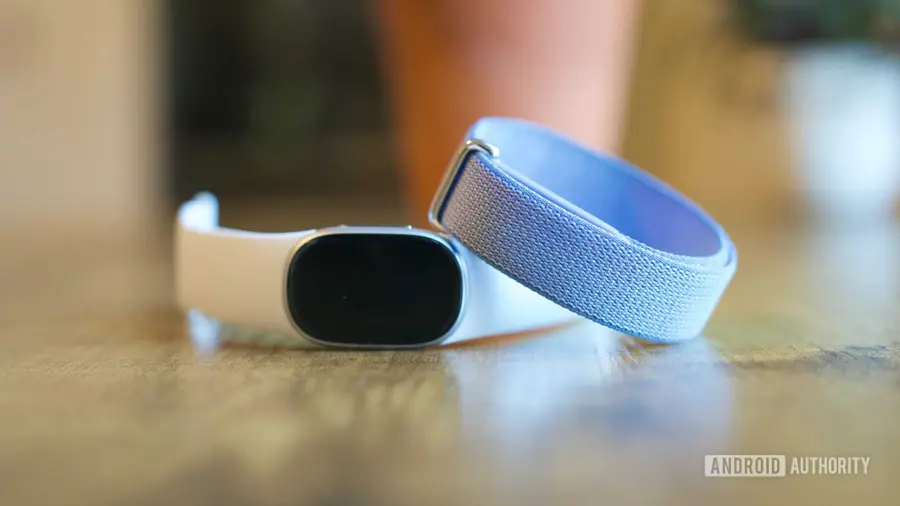
Introduction to Fitbit Edge and Fitbit Air
Recently, Google unveiled the Fitbit Edge, a new fitness band that fills the gap between the Fitbit Air and the latest Pixel Watch 5. While the Air lacks a display, the Edge features an interactive AMOLED screen, allowing users to view workout statistics conveniently on their wrist. This enhancement makes it a practical choice for daily activities.
Health Tracking Features Comparison
As a fitness tracker, the primary focus is on health monitoring. The Edge comes with a higher price tag, costing $80 more than the Air. To determine whether the increased price is justified, I created a comparison table to evaluate the health tracking capabilities of both devices.
Surprisingly, the Fitbit Air shares many features with the more expensive Fitbit Edge. The Edge’s display is definitely a highlight, enabling users to access their health stats effortlessly during workouts. It also boasts built-in GPS, an altimeter, ECG readings, on-wrist workout controls, and live coaching, which can significantly enhance the workout experience.
Similarities in Health Monitoring
Despite the price difference, the Fitbit Air is not far behind in terms of health tracking capabilities. Both devices provide continuous heart rate monitoring, heart rate variability (HRV), resting heart rate, SpO2 levels, and insights on blood pressure and insulin resistance. Additionally, both offer subscription access to Google’s Gemini-powered Health Coach.
The Air also excels in sleep tracking, featuring a lighter design that makes it more comfortable to wear at night. Its Sleep Breathing Quality feature is also further along in development compared to that of the Edge.
Personal Preference and Usage Scenarios
When considering which device to purchase, it boils down to personal preference. For me, I would lean toward the Fitbit Air. I prefer not having another screen demanding my attention, especially since I already spend a significant amount of time interacting with various digital devices. The idea of a tracker that monitors my health without being intrusive is appealing.
Most of my workouts involve gym sessions or Pilates classes, where I don’t feel the need to constantly monitor my heart rate. I’m content checking my stats after workouts, and the Air’s automatic workout detection feature is beneficial on days when I forget to initiate a session manually.
Unique Features of Fitbit Edge
The Fitbit Edge does offer certain advantages, such as built-in GPS, which allows users to track their runs without carrying a phone. This feature is valuable for those who prefer running independently. However, since I usually carry my phone, the absence of built-in GPS in the Air isn’t a significant drawback for me.
Real-time coaching is another feature that the Edge offers, providing prompts to push harder or slow down during workouts. While I can see the benefit of this functionality, it’s not compelling enough for me to spend an additional $80.
However, the ECG capability is a feature I would miss with the Air. The Edge allows users to take ECG readings directly from their wrist, detecting potential signs of atrial fibrillation (AFib). In contrast, the Air lacks this functionality, relying instead on background pulse monitoring.
Final Thoughts
Overall, while the Fitbit Edge is undoubtedly a more advanced fitness tracker, my priorities lean toward a lighter, less intrusive device that still offers essential health insights. If you value additional features like built-in GPS and on-demand ECG readings, the Edge may be worth the extra investment. However, for someone who prefers a simple, effective tracker, the Fitbit Air is the smarter choice, allowing for savings without sacrificing essential health monitoring.
Source: https://www.androidauthority.com/google-fitbit-edge-vs-fitbit-air-3727053/