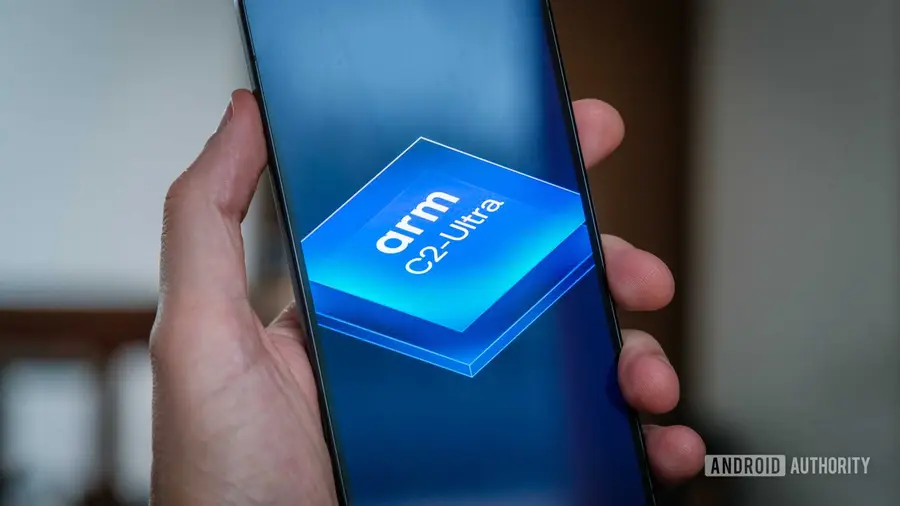
As the dialogue surrounding mobile AI evolves, Arm has introduced an intriguing solution with its C2-Ultra CPU, designed to power future Android devices. This new architecture marks a significant shift in how smartphones could handle artificial intelligence tasks, moving beyond dedicated neural processors and leveraging general-purpose CPUs instead.
What is the C2-Ultra?
The C2-Ultra is the latest CPU from Arm, succeeding the previous C1-Ultra model. Slated for integration into upcoming MediaTek and Samsung chipsets, this core is expected to feature prominently in flagship smartphones set to launch in 2027. While specific product announcements are yet to be confirmed by Arm's partners, the usual release timelines suggest that this core will be a staple in next-generation devices.
Performance Enhancements
Arm claims that the C2-Ultra delivers a peak performance boost of up to 15% compared to its predecessor. This improvement is partly attributed to an increase in clock speed, reaching up to 4.45GHz. However, a significant portion of the gains comes from architectural enhancements, allowing the C2-Ultra to maintain performance while achieving a remarkable 38% reduction in power consumption, thanks to its 2nm manufacturing process.
Architectural Innovations
Notably, the C2-Ultra retains the same pipeline width as the C1-Ultra, differing instead in its execution capabilities. The core now supports a 30% larger execution window, enabling approximately 2,600 instructions to be processed simultaneously. This design choice enhances the chip's ability to reduce bottlenecks by optimizing the order of code execution, which leads to faster processing times and lower power usage.
AI Performance Capabilities
Artificial intelligence remains a critical focus for Arm, with the C2-Ultra promising a substantial performance enhancement in AI tasks, boasting up to a 1.7x gain in efficiency for low-precision computations. This is achieved through the inclusion of dual Scalable Matrix Extensions (SME2) units in the CPU architecture, which allows for improved parallel processing of AI workloads.
Real-world applications show significant strides as well, with benchmarks indicating a 40% decrease in speech-to-text latency and a 41% increase in memory retrieval speed. These advancements suggest that users can expect a more responsive experience when using voice recognition and machine learning features on their devices.
Looking Ahead
As Arm continues to refine its CPU offerings, the C2-Ultra is poised to play a pivotal role in shaping the future of mobile technology. Anticipated configurations, including combinations of C2-Ultra and lower-tier cores like the C2-Premium and C2-Pro, will likely cater to a range of devices from budget to flagship. With the potential for configurations featuring up to 12 cores, the possibilities for performance and efficiency are promising.
As we approach 2027, keep an eye out for exciting announcements from Arm's partners regarding the integration of the C2-Ultra into their upcoming products. The landscape of mobile AI is set for a notable transformation, and Arm is at the forefront of this evolution.
Source: https://www.androidauthority.com/arm-c2-ultra-explained-3706334/