Innovative Use of Old Smartphones
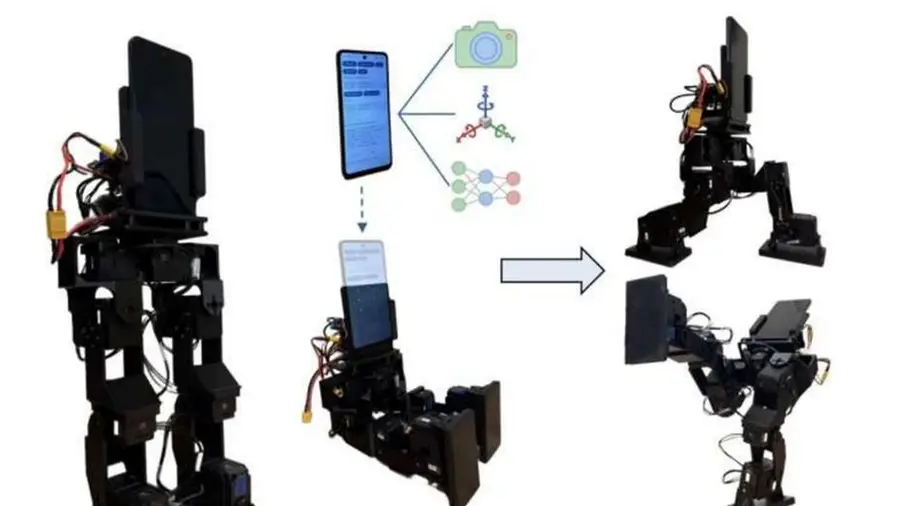
Old smartphones that are no longer in use can be repurposed in surprising ways. Researchers have successfully transformed Android phones into the brains of a two-legged robot capable of walking, following humans, and even getting back up after a fall.
Introducing PhoneBot
The robot, named PhoneBot, was developed by a research team at the University of California, Los Angeles (UCLA). Unlike typical humanoid robots that require specialized computing devices and sensors, PhoneBot leverages the capabilities of a smartphone to control its movements.
Specifications and Cost
According to reports from Tech Xplore, PhoneBot stands at approximately 48 cm tall and weighs 1.8 kg, including the smartphone used. The estimated cost for the hardware is around USD 400, excluding the price of the phone.
How PhoneBot Works
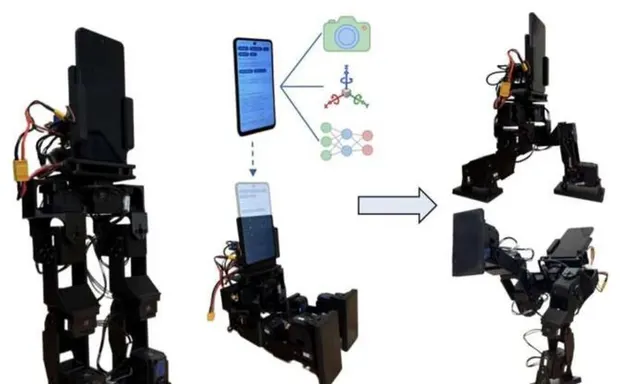
The smartphone is mounted on the robot's body just above the hips. The phone's camera is utilized for environmental recognition and tracking human presence, while motion sensors help determine the robot's position and orientation. Additionally, the smartphone's processor runs software that governs the robot's movements. Commands are transmitted via Wi-Fi to a small computer within the robot, which then relays the instructions to the motors.
Motor Capabilities
PhoneBot is equipped with 13 motors: six on each leg and one for rotating its body. This design allows the robot to move its camera side-to-side without shifting its legs.
Device Compatibility
Interestingly, the researchers did not utilize the latest flagship smartphones. Instead, they tested PhoneBot with four different Android devices: the 2017 Honor 9, Moto G 2024, Moto G 2025, and Samsung Galaxy A16 5G. All four devices successfully performed the robot's primary functions, including sensing, motion control, and camera-based vision. However, the Honor 9 could not utilize mapping features due to the absence of necessary Google services.
Demonstration and Limitations
In a demonstration, PhoneBot effectively walked on two legs, tracked a person’s movements using its camera, and stood back up from a prone position. However, its capabilities are still limited. Currently, PhoneBot does not have arms, and its movement system has only been trained for flat surfaces. The low-cost motors used also restrict the weight it can handle and the intensity of its movements.
Future Developments
Researchers plan to enhance the robot's abilities, aiming to enable it to traverse uneven surfaces and add lightweight arms for object manipulation.
Open-Source Platform
PhoneBot is designed as an open-source platform that can be studied and modified. The hope is that this technology will make robotics research more accessible for students, educators, and researchers without the need to invest in expensive robotic systems.
Source: https://inet.detik.com/consumer/d-8702528/smartphone-bekas-disulap-jadi-robot-berkaki-begini-wujudnya